
How Important Is Light for the Presentation of Architecture?
Light is one of the central yet often underestimated design elements in architectural presentation. A building does not exist independently of light — it becomes visible, readable, and emotionally tangible through light. Light ultimately determines whether architecture appears cold or warm, monumental or intimate, abstract or inviting. For architects, photographers, and viewers alike, light is therefore not a technical detail, but a fundamental narrative medium.
Light Shapes Space — Not Just Surfaces
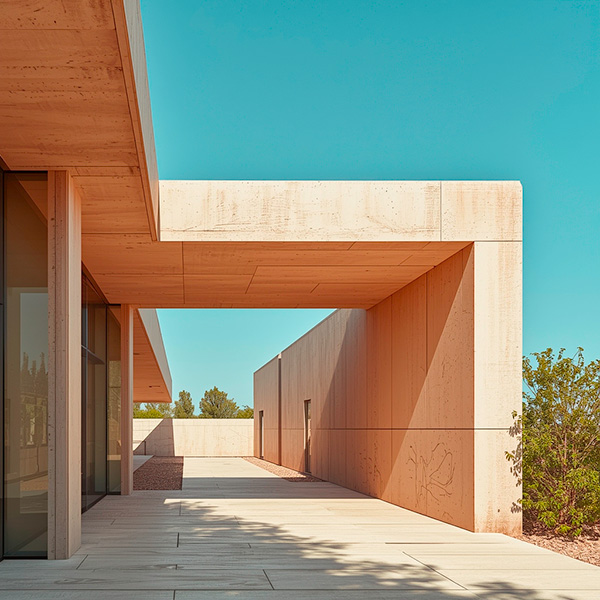
Architecture is often defined by form, material, and proportion. Yet without light, these qualities remain silent. Daylight models volume, creates depth, and reveals structure. Shadow lines make edges legible, while reflections can seemingly dissolve solid forms. Especially in architectural photography, this becomes evident: the same building can appear entirely different depending on the lighting conditions.
The deliberate use of light — whether natural or artificial — is therefore a form of translation. Light translates an architectural concept into a visual experience. Even, frontal lighting tends to appear documentary and neutral. Side light, by contrast, can create drama and transform architecture into an autonomous visual object.
Daylight as a Storyteller
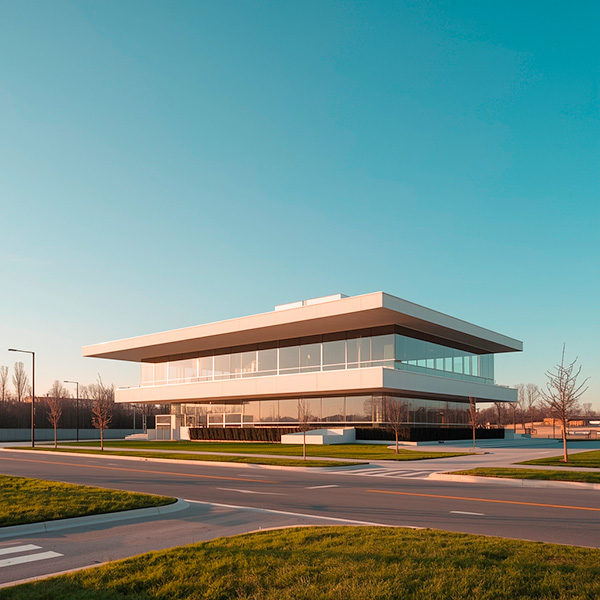
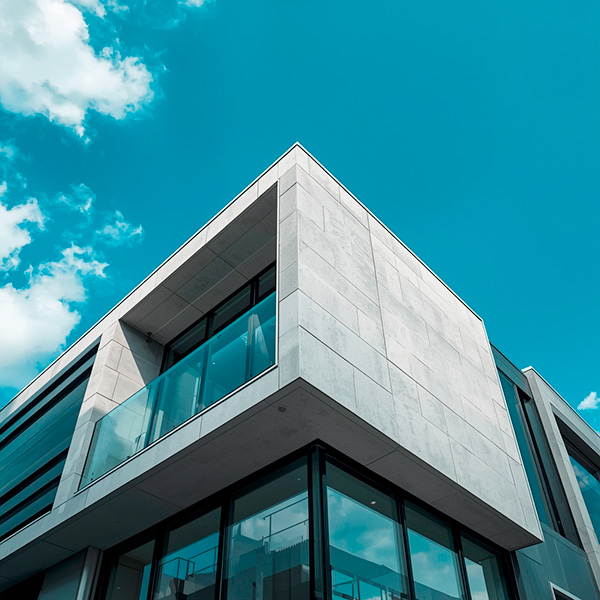
Many architects already design with the daily path of the sun in mind. Light becomes a dynamic component of the building itself. From a photographic perspective, this means that timing is crucial. The so‑called “golden hour,” with its warm, low‑angled light, is often used to render façades more sculptural and atmospheric. Harsh midday light, on the other hand, emphasizes geometry, contrast, and abstraction.
Renowned architectural photographers such as Julius Shulman demonstrated how profoundly light shapes perception. His iconic images of Californian modernism thrive on the interplay between interior and exterior light, on the transition between day and night. Architecture is not merely documented — it is staged.
Light as a Tool of Abstraction
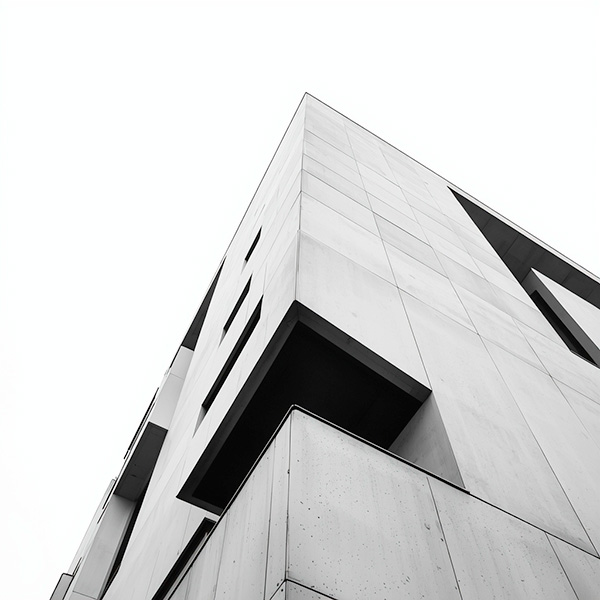
Other photographers deliberately use light to detach architecture from its function. Lucien Hervé, a close collaborator of Le Corbusier, reduced buildings to light, shadow, and graphic planes. People, use, and context recede into the background. Light renders architecture timeless, almost sculptural.
Contemporary photographers such as Hélène Binet also work intensively with contrast and darkness. Their images demonstrate that good light does not necessarily mean more light. On the contrary: reduction, shadow, and ambiguity can help reveal the essence of a space.
Artificial Light: Staging and Identity
At night, architecture is reinvented. Artificial light gives buildings a new identity within the urban landscape. Museums, bridges, and public buildings become landmarks and points of orientation through lighting design. In terms of presentation, light becomes part of architectural branding.
Good architectural photography acknowledges this staging without exaggerating it. It shows how light makes architecture readable — while simultaneously generating emotion.
Conclusion
Light is not an accessory, but a central means of architectural communication. It determines how a building is perceived, understood, and remembered. Anyone who presents architecture — whether through photography, design, or urban space — is always working with light. Architecture without light remains invisible.