
Brutalism: Beauty in Raw Concrete and the Photographers Who Make Us See It
Brutalist architecture stands as one of the most visually striking — and emotionally polarizing — movements of the 20th century. Born in the post-war reconstruction era and flourishing between the 1950s and the late 1970s, Brutalism emerged as a radical response to both architectural tradition and the social needs of a changing world. Its name, derived from the French phrase béton brut or “raw concrete,” emphasized the material’s natural texture and inherent honesty, not aesthetic brutality.
In contrast to the decorative tendencies of earlier periods, Brutalist buildings celebrate their structure and materials openly: exposed concrete surfaces, geometric forms, and unadorned volumes become the very language of the architecture. This architectural honesty was often linked to democratic ideals — public buildings, educational institutions, libraries, and social housing projects embraced a bold functionalism that aimed to serve society rather than merely to please the eye.
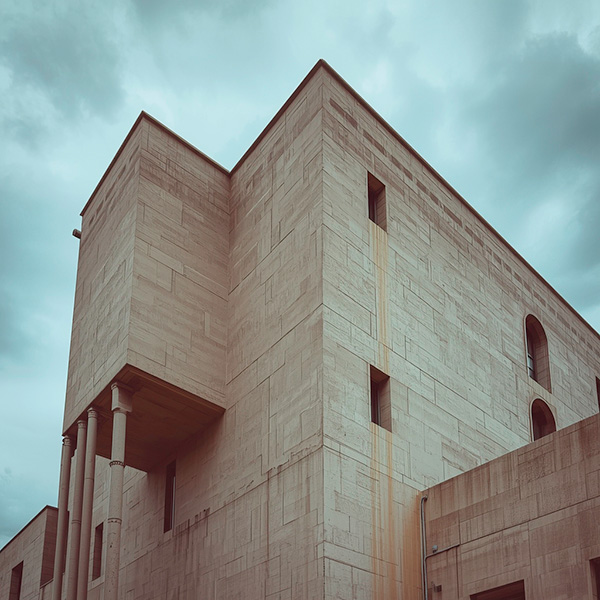
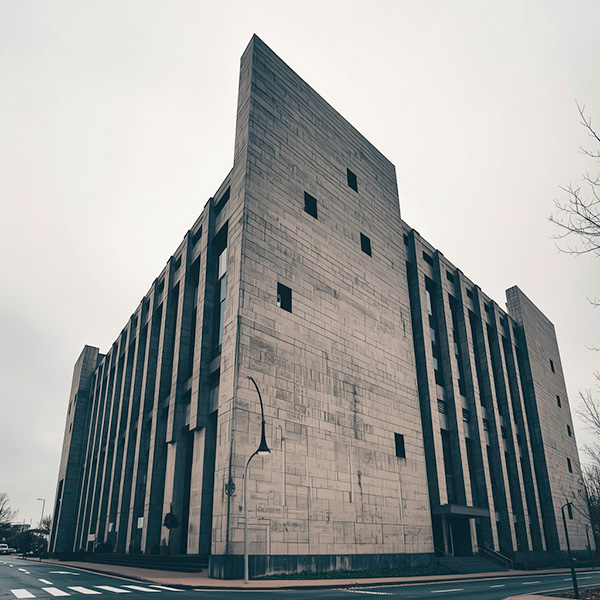
Despite its lofty ambitions, Brutalism was never universally loved. Its monumental concrete forms were dismissed by some as cold, oppressive “concrete monsters,” and many buildings suffered neglect as fashion shifted toward postmodern styles in the 1980s and beyond. Yet today, a renewed cultural interest has emerged, particularly among photographers and visual artists who find in Brutalism a compelling interplay of form, light, and texture.
One of the most influential contemporary voices in Brutalist photography is Peter Chadwick. Originally a Twitter project, Chadwick’s This Brutal World became a celebrated visual archive and eventually a published book that reframes Brutalist architecture with aesthetic and emotional depth. His images, often stark and powerful in black and white, emphasize the raw geometry and sculptural impact of concrete — encouraging viewers to see beyond the stereotype of desolation and to appreciate the daring design beneath.
Similarly, British photographer Simon Phipps has devoted much of his work to capturing the Brutalist landscape of cities like London and Glasgow. His books Brutal London and Brutal Scotland explore the “sensual extremes” of post-war concrete, offering a photographic journey through both iconic and overlooked structures. Phipps’ practice often highlights the tactile qualities of concrete and the spatial drama that emerges when light meets raw material.
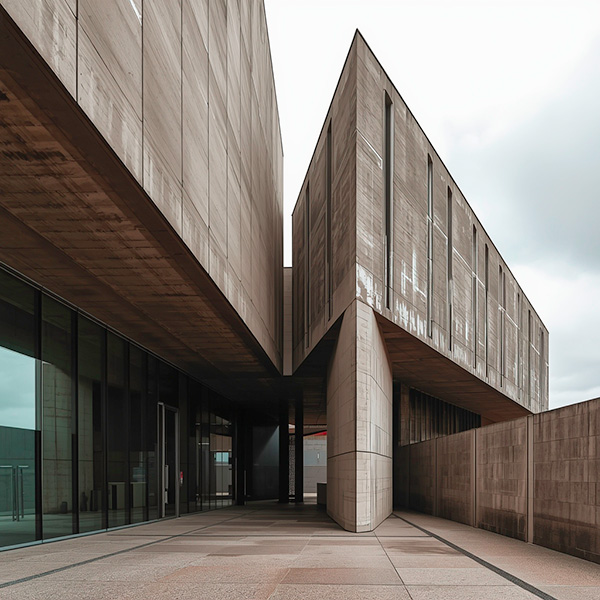
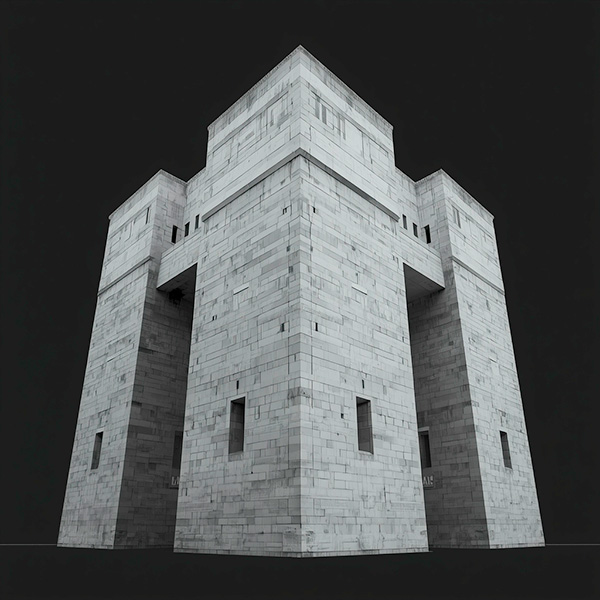
Beyond these two, numerous independent photographers and projects have embraced Brutalist buildings as photographic subject matter. Berlin alone, for example, has nurtured visual explorations of this style, revealing how similar concrete forms can express vastly different moods depending on light, context, and framing.
What makes Brutalist architecture so rich as a photographic theme is precisely its openness to interpretation. Its reduction to basic shapes and its interplay with natural light create dramatic compositions that reward close visual study. In the hands of a skilled photographer, Brutalism transcends its material roots to become an expressive language of shadow, proportion, and material presence — a mode of seeing architecture that aligns perfectly with the visual quest of minimal and abstract photography.
Today, as preservation movements grow and cultural narratives evolve, Brutalist buildings are increasingly appreciated not just as relics of a specific era, but as enduring icons whose photographic representations continue to influence how we engage with space and structure.