
Jan Madeus · Berlin
Auf Augenhöhe
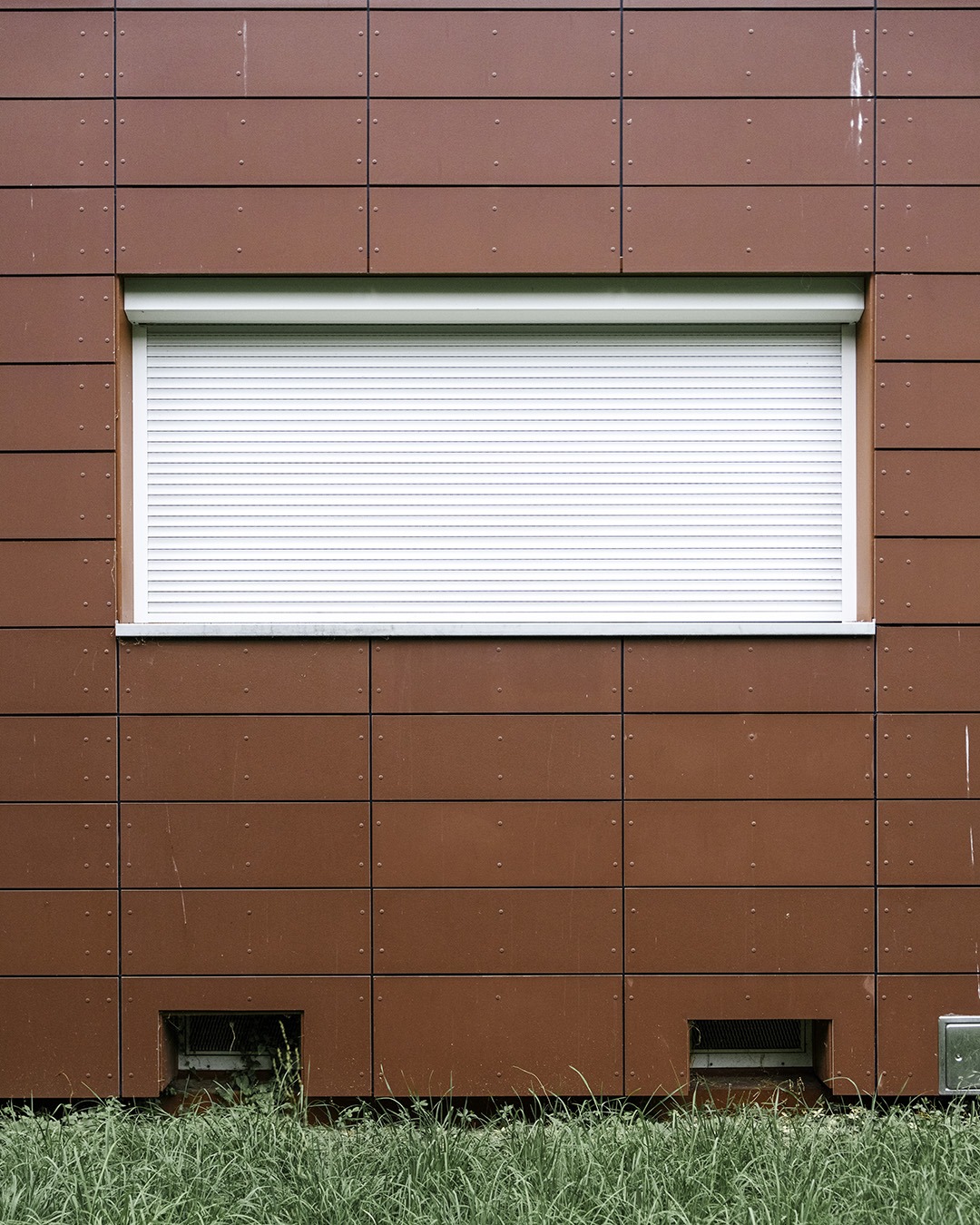
Apartment blocks repainted in the colours of their refurbishment. In every picture one window, photographed at eye level, with the shutter down. The colour is the buildings’ own.
At Eye Level
These houses were insulated and repainted. Someone chose the green, the red, the ochre — someone in an office, for a whole estate at once. The people behind the walls were not asked.
What they can decide is the shutter. Up or down. It is the last part of the façade that still belongs to them, and it is the part that says: not today.
So I stand at eye level and photograph straight on, one window at a time. The wall stays flat, nothing recedes. You are as close as you would be standing there, and you get no further.
In Das Haus gegenüber I remove the traces of habitation myself. Here the inhabitants do it for me. The same erasure, a different hand. That is why the colour stays exactly as I found it — in this series it is evidence, not a decision of mine.
What is Auf Augenhöhe?
Auf Augenhöhe (German for “at eye level”) is a fine-art photography series by the Berlin artist Jan Madeus. It photographs post-war German apartment blocks after thermal-insulation refurbishment — render repainted in ochre, red, salmon, mint and blue — with a single window in each frame and the roller shutter fully closed.
The rules are fixed. The camera stands at eye level. The wall runs parallel to the picture plane, so nothing recedes into depth. One window per picture, the shutter down, and the plinth with its basement vents stays in frame as a second kind of closed opening. Unlike the artist’s series Fremde Fassaden, where colour is shifted in post-production, the colour here is left exactly as found. It is the colour of the refurbishment, and it carries the argument: the façade was decided from above, the shutter from behind.
The places
Five towns, one distance
The same height, the same step back from the wall, the same closed window. What changes is the town — how it shuts a window, and the colour it happens to have chosen while doing it. Each place has its own page.
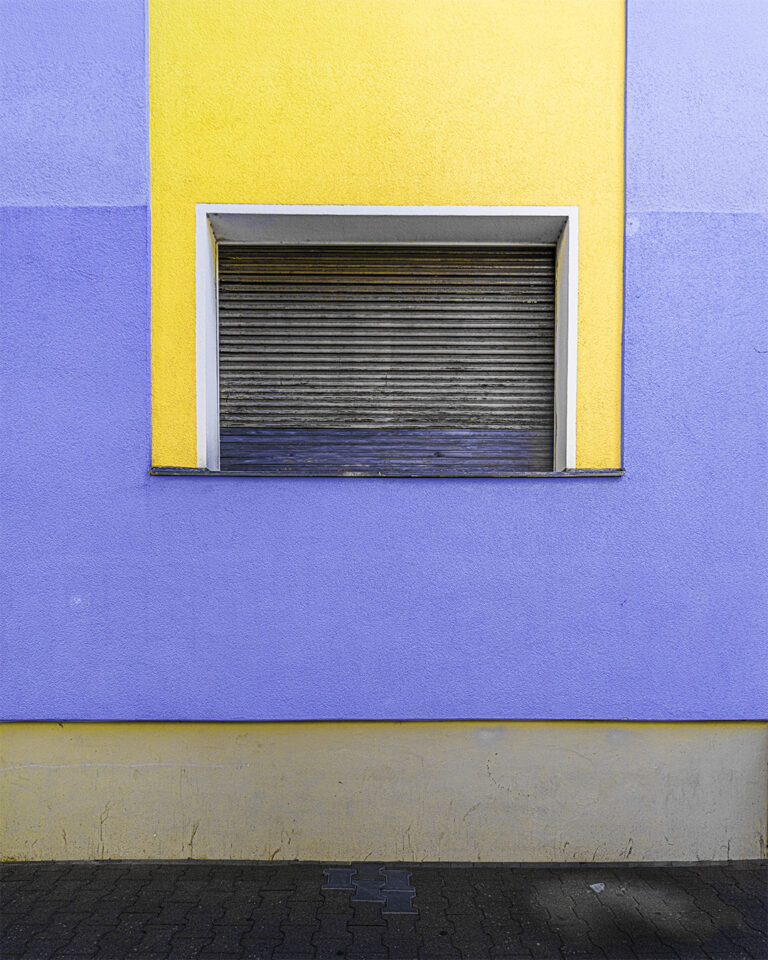
Berlin
Where the series began. Post-war apartment blocks that were insulated and repainted afterwards; the roller shutter is built into the wall above the opening rather than hung in front of it, so the closed window sits flush in a field of colour.
The colour was chosen by a housing company, the shutter lowered by whoever lives behind it. Flat light, no cast shadow on the wall — the Berlin pictures keep the strictest rule of the series.
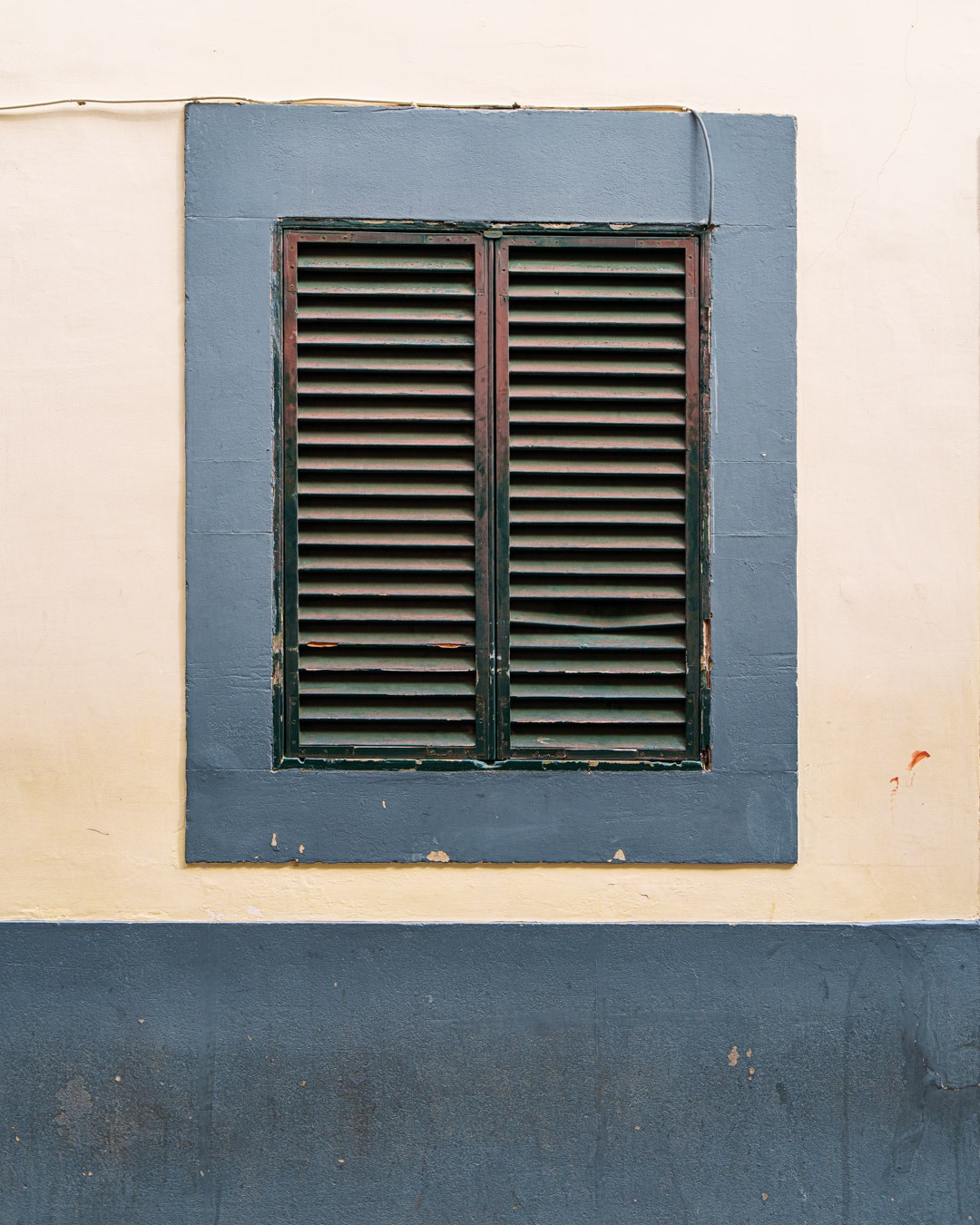
Funchal
The first chapter shown outside Berlin, and the first break with the Berlin rule. The window is closed with hinged wooden boards — louvred, painted, mounted on the outside of the wall, where the render is often rough, patched or repainted around them.
From here on the series is documentary: cables, hinges, weathering and fittings stay in the picture.

Ponta Delgada
The largest chapter, and the only town so far that runs both systems on the same streets: a roller shutter on one house, hinged louvre boards on the next. Wall fields are lime-white or fully saturated, and the openings sit in dark stone surrounds that frame the closed window like a mount.
One afternoon, two walks, divided here by what is closed and in which colour.
At Eye Level · White Walls · Green Shutters · White Shutters · Blue and Brown Shutters
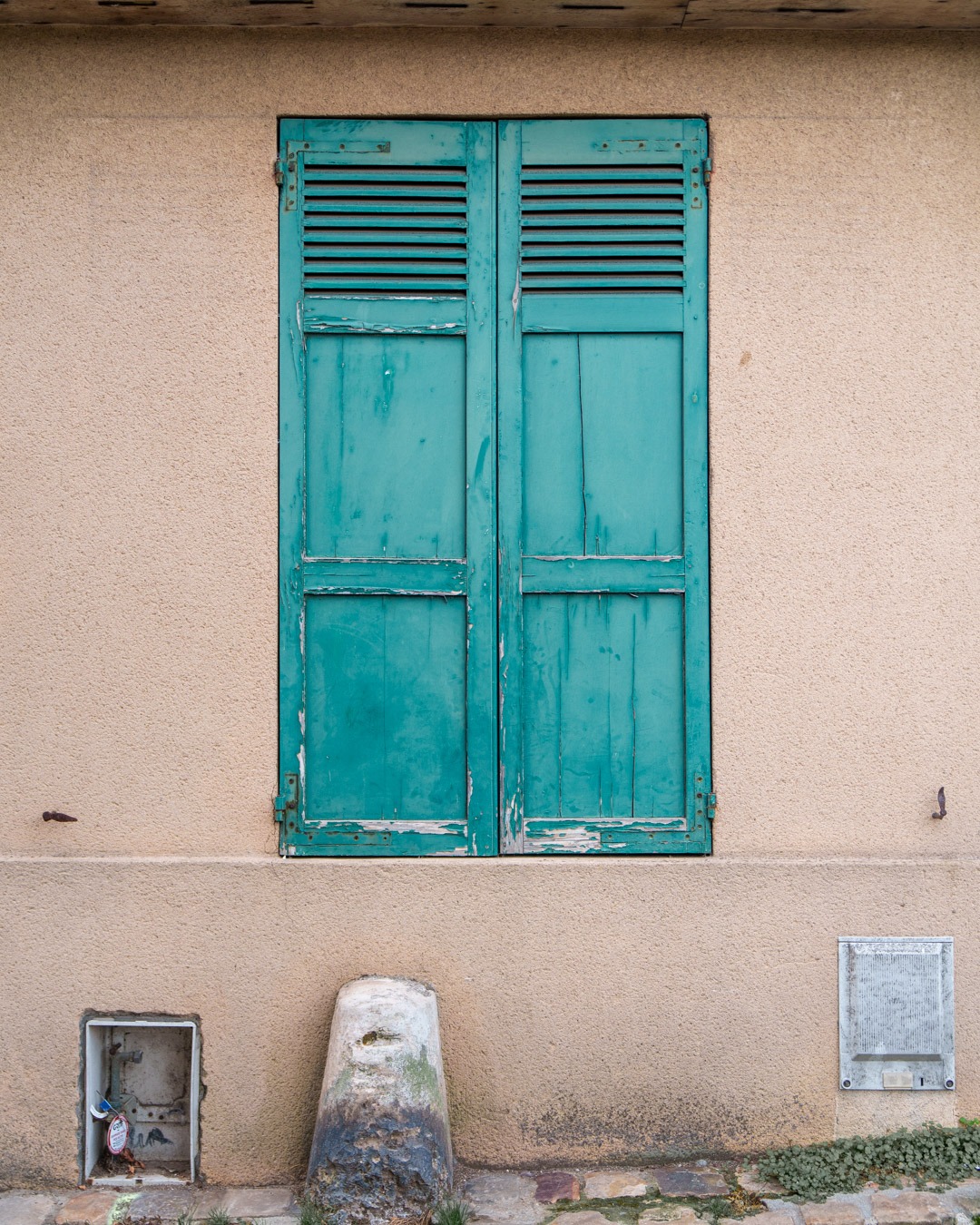
Honfleur
A town of painted wooden shutters. The tall, narrow houses with slate-covered fronts around the old harbour date from the seventeenth and eighteenth centuries, and the shutter is part of that surface rather than an addition to it.
Sixteen windows, divided by what closes them: ten in painted wood, and six exceptions — a roller, bars, mesh, a sheet of zinc screwed over green boards.
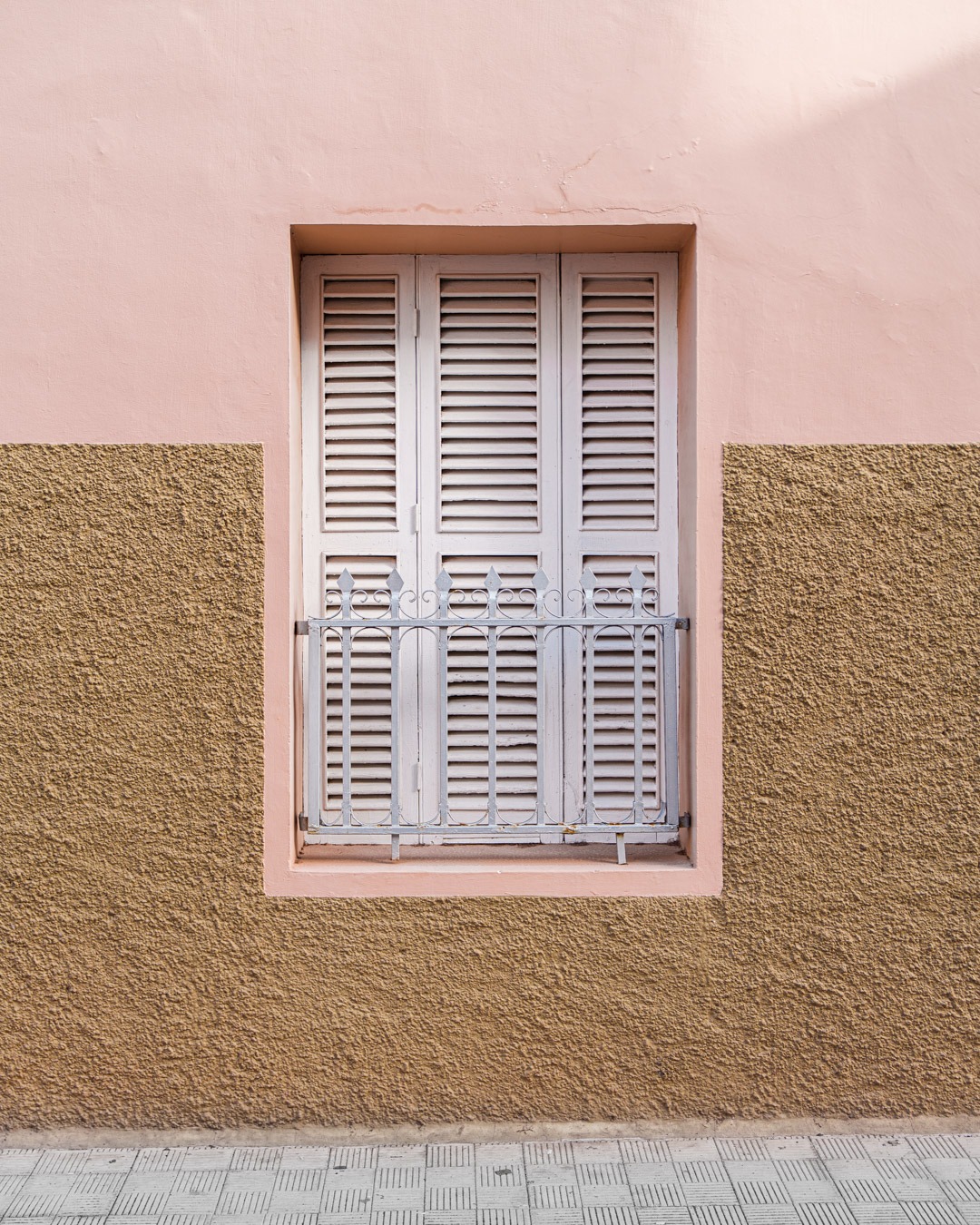
Santa Cruz de Tenerife
The first chapter in Spain, and the one where the two systems stand closest together: a metal roller over one window, a pair of louvred leaves across the next, often on the same street. The paint is saturated and applied in flat fields — an orange wall over a lilac plinth, pink stopping dead at olive green.
Sixteen windows, divided by the state of the wall rather than by what closes it: nine on render somebody still maintains, seven on render left to flake, crack and be sprayed on.
Berlin — the first chapter
About this series
The series is ongoing. It is built by repetition rather than by variety: the same distance, the same height, the same closed shutter, until the differences between one wall and the next become the subject. What changes from picture to picture is a colour that somebody else chose.
The series has begun to travel: Funchal on Madeira, Ponta Delgada in the Azores, Honfleur in Normandy, Santa Cruz de Tenerife in the Canaries. Every place has its own page, and the register above lists them all.
New work in this series goes out first to First Viewings, the small mailing list that sees it before it appears anywhere else.
Join First Viewings