An artist’s proof is a print from the finished edition that sits outside the numbered run. It carries the letters A/P instead of a number, it belongs to the artist rather than to the edition, and it exists because of the way printmaking used to work. Today it is largely a convention — but a convention with consequences for what you are buying.
Where the term comes from
Before a plate or a block was finished, the printer pulled impressions to see how the image was coming along. Tate defines a proof as an impression made before work on the plate is complete, in order to check the progress of the image. Those early pulls are trial proofs, and they are working documents — often marked up, sometimes drawn on.
When the plate was finally right, one approved impression settled the question: the bon à tirer, „good to print“, the sheet against which the whole edition was then matched.
The artist’s proof is a later and simpler thing: an impression of the finished print, made in addition to the published edition, for the artist. The practice is usually traced to English mezzotint printers in the late eighteenth century, who issued small proof runs before lettering was added to the plate. In French it is the épreuve d’artiste, abbreviated E.A. — which is why a European print sometimes carries E.A. where an American one carries A/P.
How many artist’s proofs are made
The convention is that proofs should not exceed roughly ten per cent of the edition. An edition of fifty allows about five. No authority enforces this; it is a custom, and customs get stretched.
It matters because proofs sit outside the edition number. A print sold as one of fifty, with ten proofs alongside it, is in practice one of sixty. Nobody has lied. But the buyer who thought the number meant something has slightly less than they thought.
Artist’s proof vs. limited edition
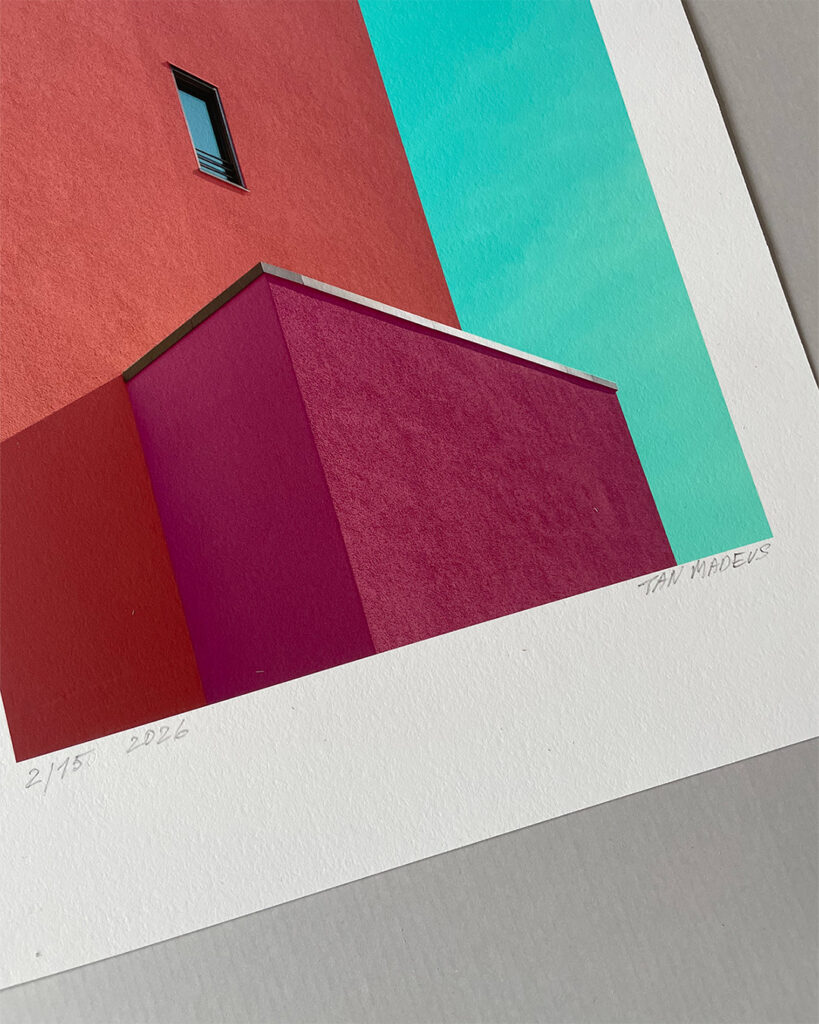
A numbered print says 12/50: the twelfth sheet of fifty. A proof says only that this sheet is not part of that count. Same file, same paper, same printer, same hand.
In etching or lithography there can be a real difference — a plate wears, and an early pull holds detail a late one has lost. In photography that difference does not exist. A pigment print marked 2/15 and one marked A/P are physically identical. The distinction is bookkeeping, not material.
Are artist’s proofs worth more?
This is the question people actually ask, and the honest answer is: sometimes, and less often than the trade suggests.
The case for a premium is scarcity. Two or three proofs against an edition of fifteen are rarer than the fifteen. Dealers say so plainly — MyArtBroker’s glossary calls artist’s proofs generally more valuable because of their exclusivity. For artists with an active secondary market, and for historic prints where the proof genuinely differed from the edition, that holds.
For contemporary photography it usually does not. Where the proof is identical to the numbered sheet, the premium rests on the letters alone. If someone asks more for an A/P of a digital pigment print, the reasonable question is what is different about it. If the answer is nothing, the difference is the word.
Two exceptions are real. A printer’s proof (P/P) is rarer still, and the bon à tirer — one sheet per edition, the one everything else was matched against — is the single proof with an argument behind it.
The other marks on a print
- 12/50 — the twelfth sheet of an edition of fifty.
- A/P or E.A. — artist’s proof, outside the numbered edition.
- P/P — printer’s proof, kept by whoever made the print.
- BAT — bon à tirer, the approved sheet the edition was matched to. One per edition.
- H.C. — hors commerce, outside of trade: copies for galleries and exhibitions, not intended for sale.
How I handle proofs in my own editions
I make two artist’s proofs of each work and keep both.
They do not enter the market. My editions run fifteen, ten and five depending on format, so two proofs sit inside the usual ten-per-cent convention for the large edition and slightly outside it for the small one. They exist for the reason proofs have always existed: one to confirm that what came off the printer is what I meant, one to keep.
Which means the published edition is the number on the sheet plus two that cannot be bought. If you own 2/15, there are fourteen other sheets in the world and two in my flat. I would rather say that in plain words than leave it in the small print.
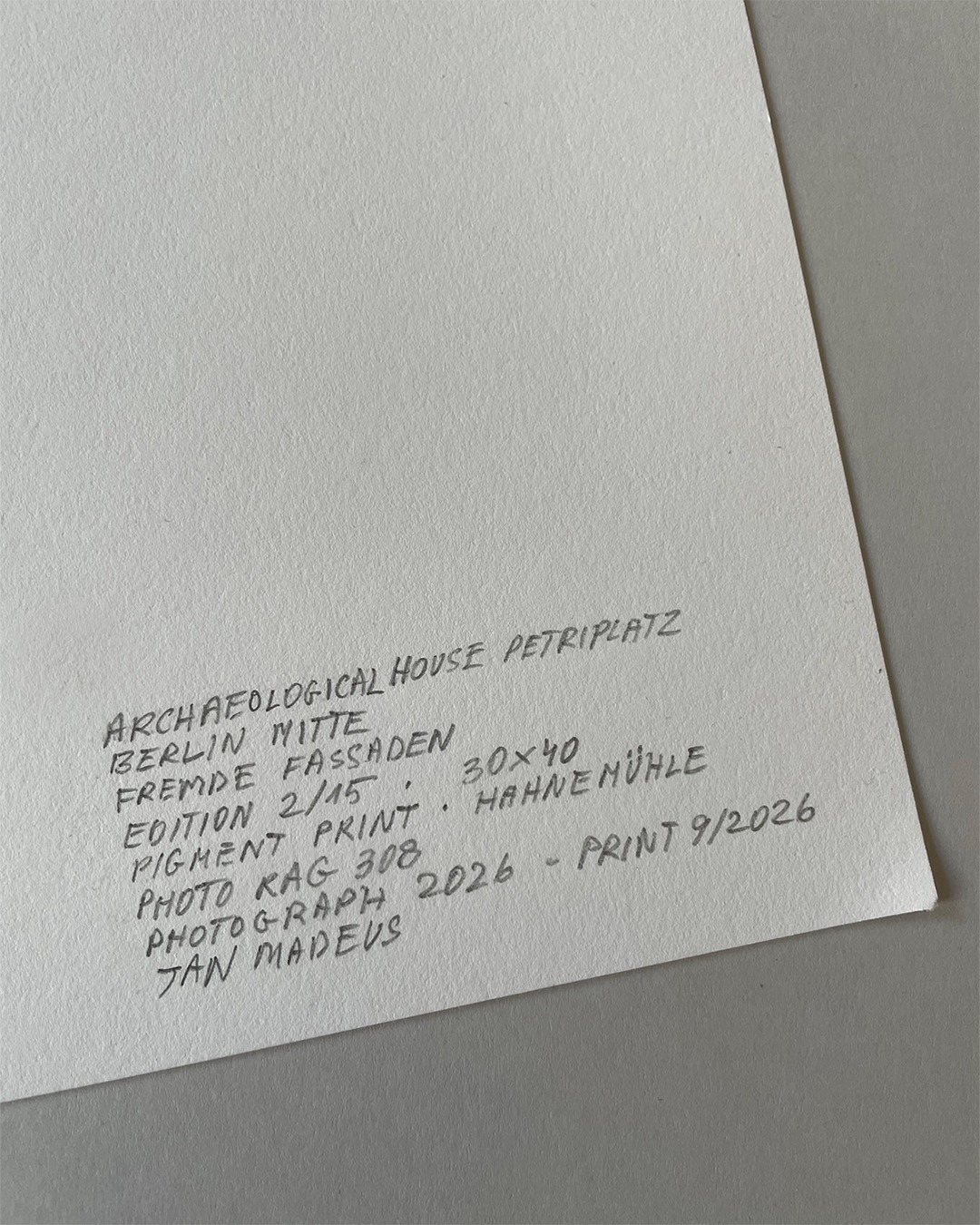
Every sheet is signed in pencil on the back with title, series, edition number, paper and date, and comes with a certificate on which the number, the date and the signature are written by hand. The rest of the detail — papers, sizes, what the numbers mean — is in the guide to limited edition fine art photography, and the current editions are on the prints page.